
In early 2015 we cut what was not working — trading other oils, our own sales vans, costly customers, paying by the day — and turned two years of losses around.

A business friend gave me The 80/20 Manager by Richard Koch. I left it unread for six months, expecting another self-help book: good to read, quickly forgotten. But it matched what I already believed, and was easy to follow. It gave me the confidence to act on those beliefs.
In short, the book applies the Pareto principle to management: a few well-chosen inputs, about 20%, produce most of the results, about 80%. In business, for example, 20% of customers may bring in 80% of revenue and profit.
In the three years since we started, we have tried many things. Here is how we regained our focus in the last three months.
1. We stopped trading other oils
As coconut oil grew dearer, consumers moved to other oils. Demand in our market fell, especially for 1-litre pouches, as people switched to 500 ml. So we began trading other oils too: refined palmolein, refined sunflower oil and lamp oil. This let us:
- offer our retailers a full range of oils, not just coconut oil;
- earn more from the same customers and the same delivery network; and
- fill our vehicles, and keep track of the other oil markets.
But it had a cost:
- our attention drifted from our core business, making and marketing coconut oil;
- service suffered when our suppliers’ deliveries failed; and
- it created a lot of extra work: transport, loading, accounts, leaks, credit and working capital.
The trading looked busy, but it neither built the Cocoguru brand nor improved profits. So we stopped it altogether, closed our godown in Sullia, returned a rented vehicle and freed other resources.
2. We handed sales to distributors
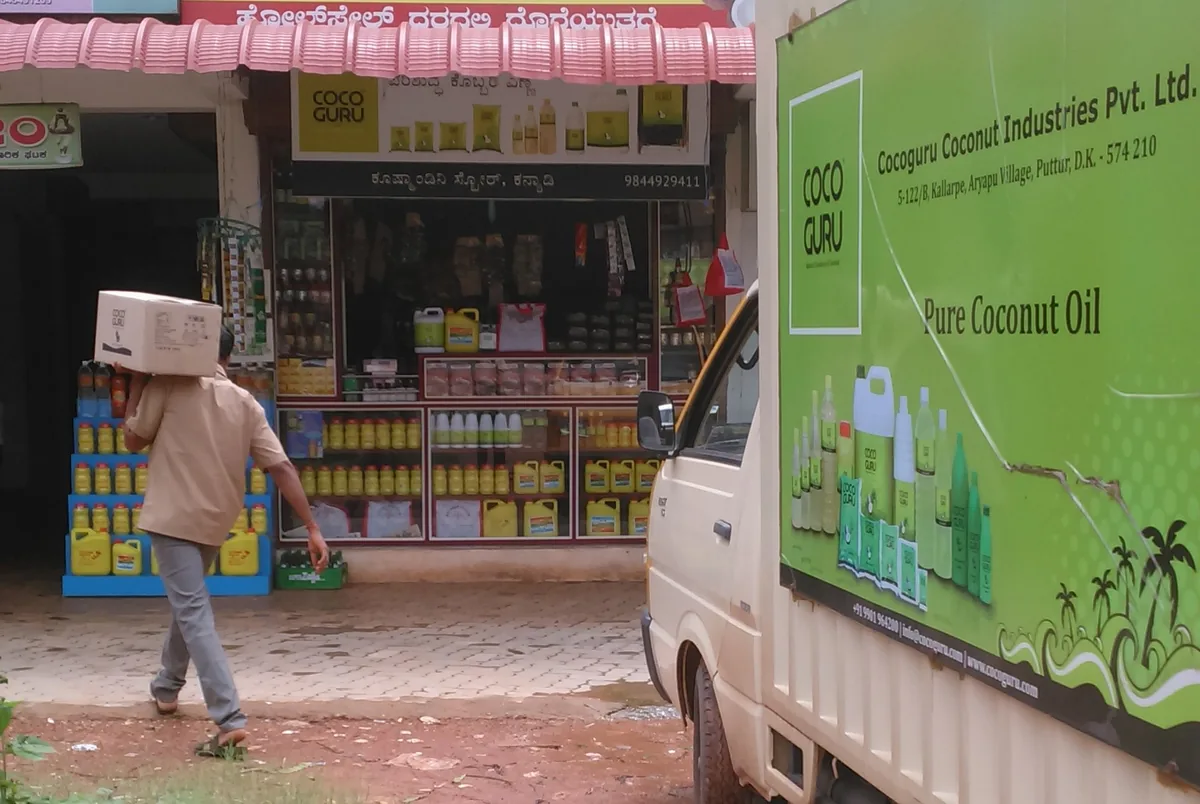
At first we supplied wholesalers and retailers ourselves, from our own vans, each with a driver and a salesman, plus accountants and an officer to manage them. It was thankless work for a manufacturer, but we needed it to get established. Sales and distribution took 40% of our costs, with five vans across Dakshina Kannada.
I had long wanted to hand our routes to distributors, but they would take them only once they trusted the brand to sell and to pay. Our bold decision to raise prices made that possible much sooner. We parted with less productive salespeople, helped the motivated ones become distributors, and sold them our vans at fair prices. Our payroll fell by 12 people; we stopped renting two vehicles, sold two of our own, and no longer needed two accountants, a logistics officer, or so much of top management’s time.
Costs are now under control, and our prices are predictable. Distributors who live by their sales sell harder, and sales have risen well.
3. We let some customers go
Eager to grow, we used to serve every customer, whatever it cost. But some customers are not worth the effort: they demand discounts, credit and special attention, and are hard to please. Letting them go has helped both sides. We now focus on customers we can serve well and profitably, and they find suppliers who suit them better. For every customer lost, there are others to win.
4. We pay by output, not by the day
Supervisors often struggle to get steady quality and output from daily-wage work. So we moved to piece work: workers are paid for what they produce, not for turning up. It is fair and open — pay depends only on output, not on seniority, experience or favour. For this kind of work, an instant reward for output works better than a yearly appraisal. The results have been remarkable:
- A team of five that struggled to sort 6 tonnes of copra a day now does it with three people, better and faster.
- Workers who were reluctant to load and unload in bulk now do it willingly, at just ₹0.10 a kg.
- In packing, six people now manage easily what nine struggled with, and help in other areas too.
Our workforce fell from 30 to about 20. Less productive people moved on, and efficient workers now earn more. Work is faster, quality is better, and people are more engaged than ever.
A leaner business
All this has cut our office work sharply, and a few roles are no longer needed. With this lean set-up, we can double our business without hiring, and if business falls, our overheads stay low. Now that we are focused, our next steps are to grow sales through advertising and more distributors.
After two years of losses and uncertainty, it is a refreshing and promising turnaround.