
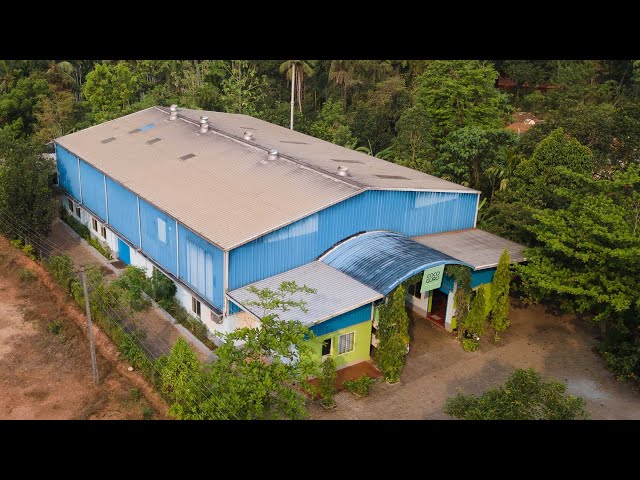
Cocoguru makes its coconut oil through a systematic and controlled process. Every stage is designed for purity, hygiene and safety, from the copra we buy to the oil we pack. Roasted, Cold Pressed and Lite follow the same route, with a few differences in the copra used, the roasting and the crushing.
How the three oils differ in making
| Detail | Roasted | Cold Pressed | Lite |
|---|---|---|---|
| Copra used | Edible grade | Edible grade | Milling grade |
| Drying and cutting | Yes | Yes | Yes |
| Roasting | Yes | No | No |
| Crushing | Both crushings | First crushing only | Both crushings |
| Three-stage filtering | Yes | Yes | Yes |
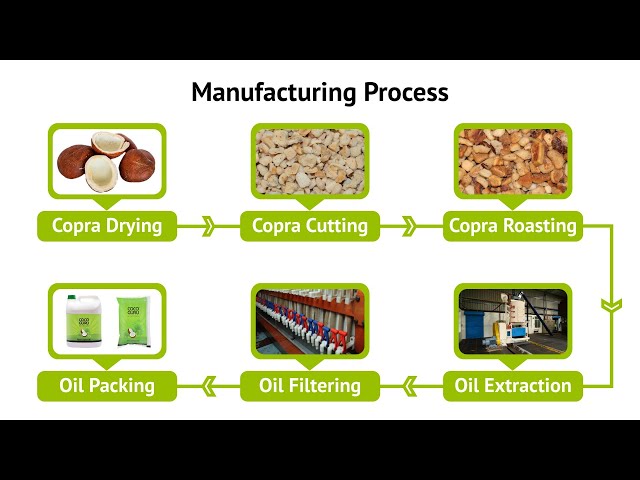
Step by step
1 · Copra purchase and sorting
Copra is bought from the coastal areas and Tamil Nadu. Roasted and Cold Pressed oils are made from edible grade copra, and Lite from milling grade copra. APMC cess of 0.6 percent and GST of 5 percent apply when the copra is bought. It comes in cup shapes, white inside and brown or black outside, packed in 50 kg gunny bags, with moisture of about 5 percent.
We buy only fresh copra. Here the coconut is cut in half, the coconut water is removed and the halves are dried in the sun. Fresh copra has low FFA. The alternative is stock copra, where the coconuts are dried in an attic for 6 to 8 months so the moisture evaporates slowly, as is done in places like Tiptur. Its FFA goes above 0.5 percent, so we do not use it.
At the time of separation, immature nuts and moulds are rejected. Each batch is inspected by eye, and foreign material such as shells, plastic threads, jute fibres and poor-quality copra is removed by hand to keep the oil uniform and pure.


2 · Copra drying
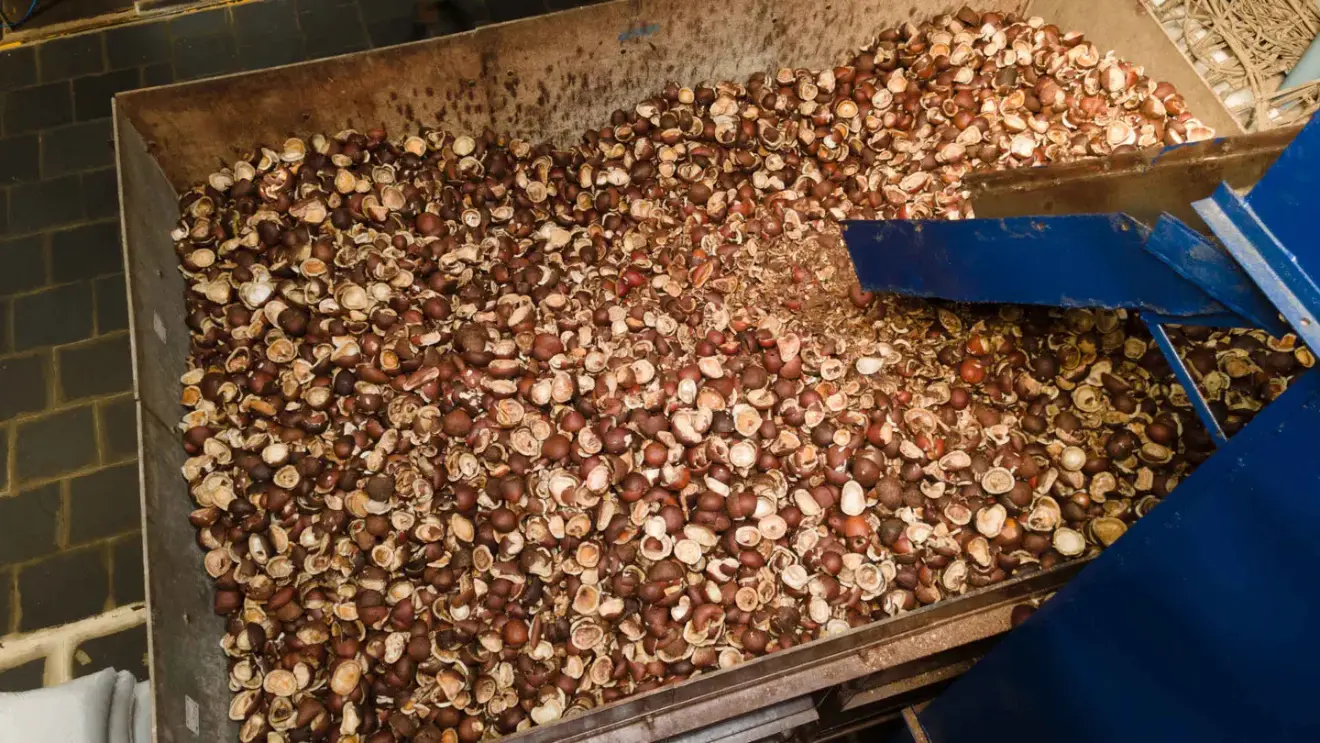
The selected copra is loaded into a drying hopper that holds 9 tonnes. Hot air at 75 to 80°C is made with an air heater and circulated by a centrifugal blower. Drying continues for 10 hours. The air heater is fired with firewood or agro waste, and the hot air that escapes from the hopper is recirculated to reuse the heat and save fuel.
- Moisture comes down from about 5 percent to 2.5 percent.
- Drying matters because moisture makes oil go rancid, and it is essential for effective crushing in the expeller and for online filtering.
- Dried copra turns hard and brittle, which suits filtering and storage.

3 · Copra cutting
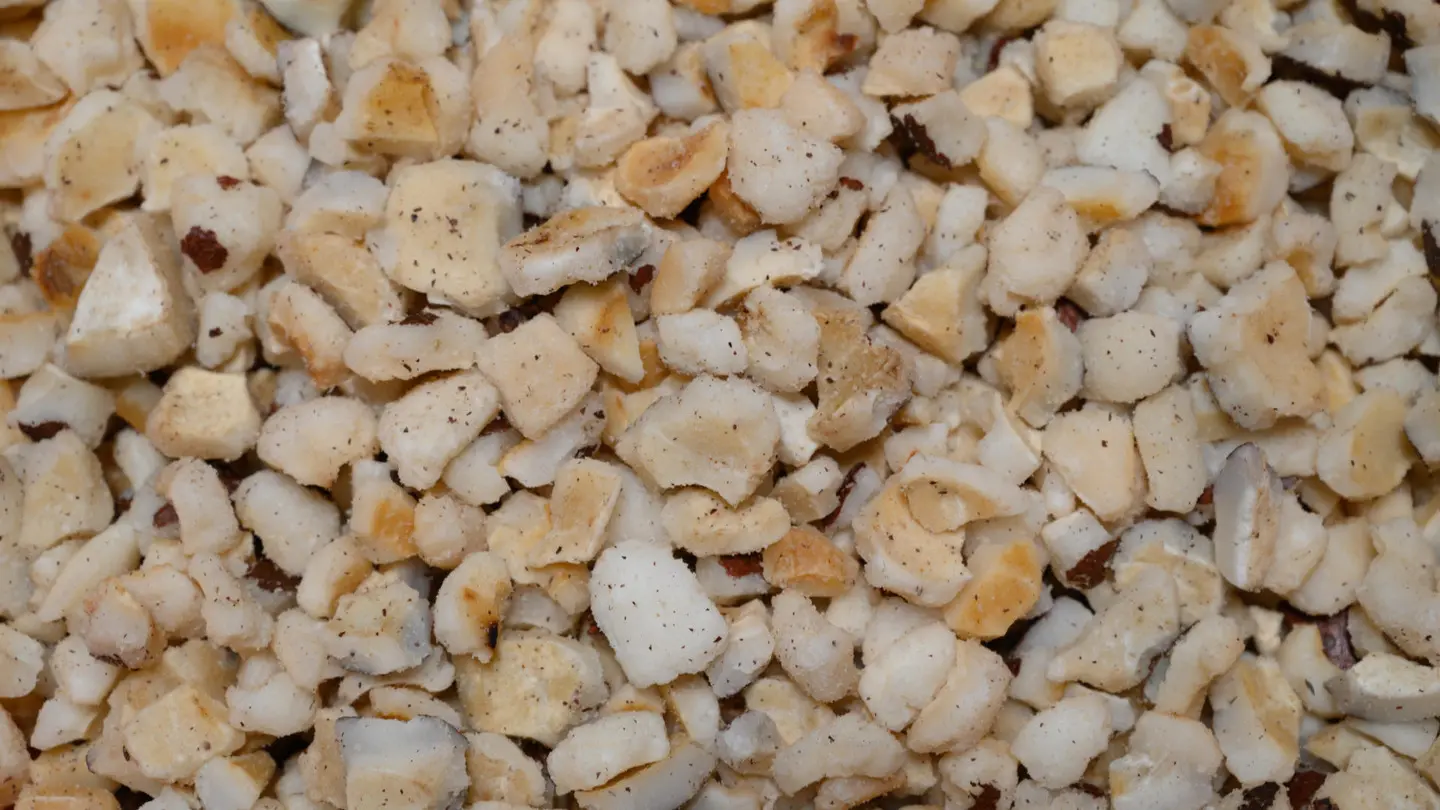
The dried copra is cut into uniform pieces of about 1 inch in a copra cutter fitted with beaters and a mesh. Cutting lets the copra enter the expeller, and the regular shapes and smaller size make it easier to handle and to move through a screw conveyor to the next stage. It also gives even roasting for Roasted oil.

4 · Copra roasting (Roasted only)
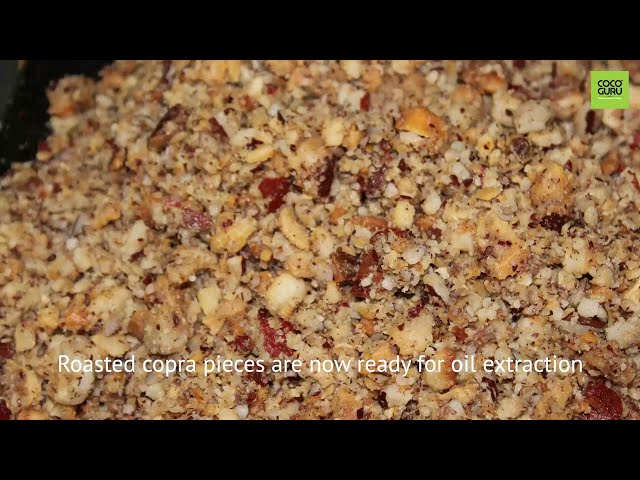
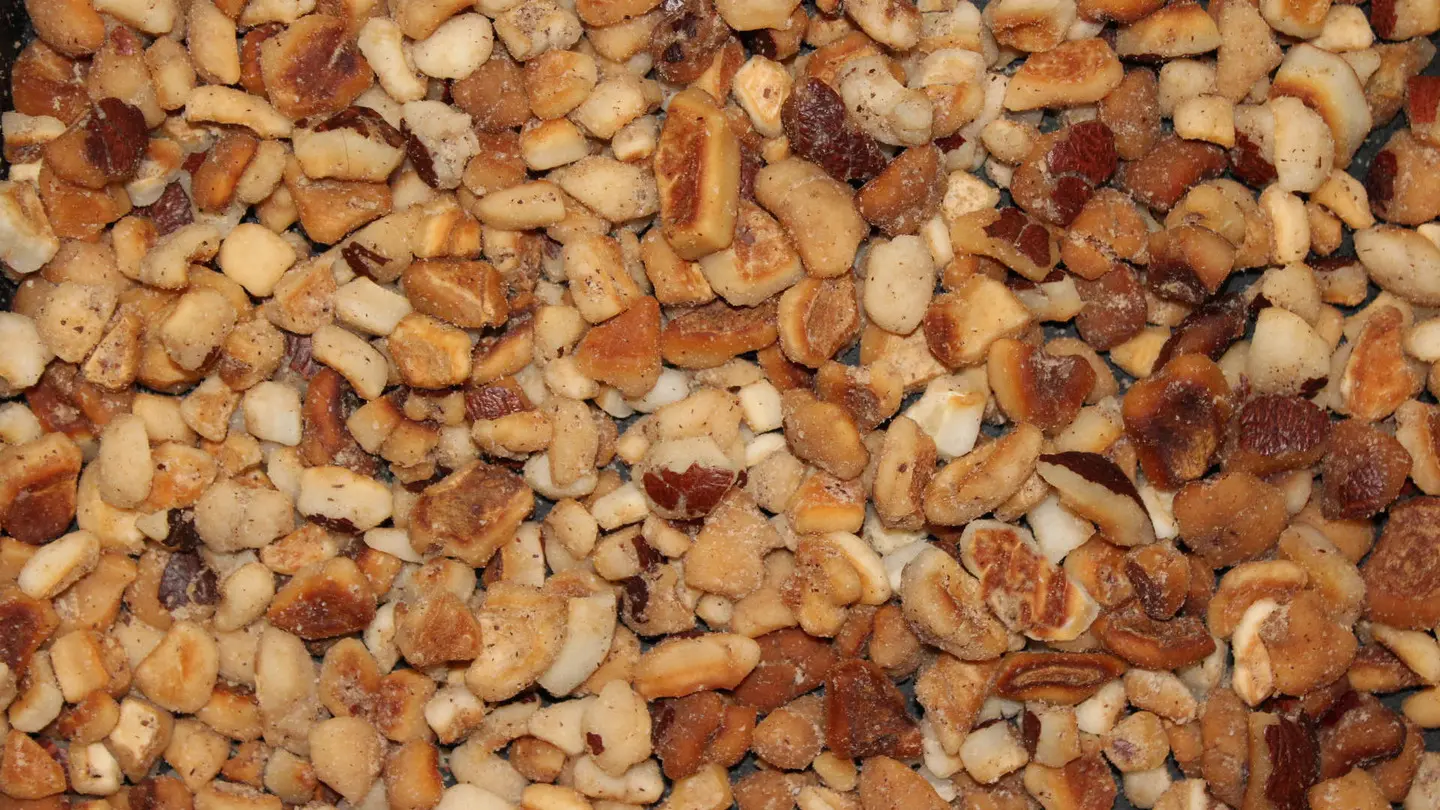
For Roasted oil, the cut copra is roasted for about an hour in a steam-jacketed vessel with continuous stirring, and a light spray of steam helps it cook. The steam comes from an IBR-compliant boiler fired by solid waste and is carried through a seamless pipeline for efficiency and safety.
Roasting improves oil recovery, gives a sweet aroma, sterilises the copra and helps the extracted oil last longer. Cold Pressed and Lite skip this step, and the copra goes straight to crushing.
5 · Crushing and oil extraction
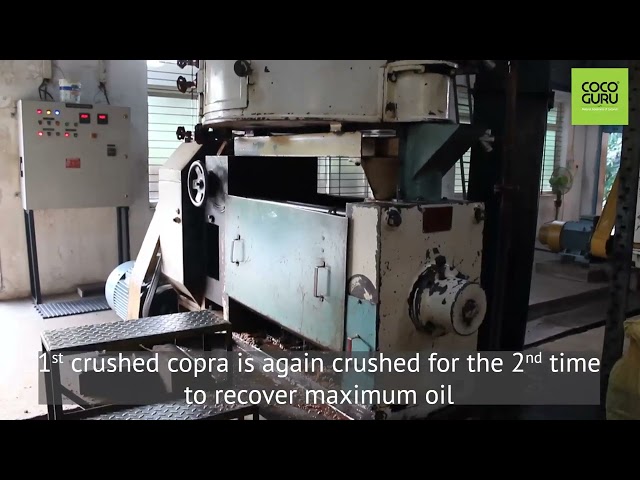
The copra is crushed in an expeller, a screw press, in two stages: the first crushing, and a second crushing of the same material to take out the remaining oil.
- Roasted: the roasted copra goes through both crushings.
- Cold Pressed: only the oil from the first crushing is used. The cake then goes for a second crushing, and that oil goes into Lite.
- Lite: made from milling grade copra, together with the second-crushing oil of Cold Pressed and the foots from the process.
Foots are small particles of copra that fall from the expeller, and also those separated later in filtering. The oil goes to a tank for filtering, and the cake goes for the second crushing or for cooling and packing. Foots are nothing but copra particles, so oil can be recovered from them when they are crushed again.
For Roasted, copra yields about 62 percent oil, 33 percent oil cake and 5 percent moisture loss, and the cake still holds about 12 percent oil. For Cold Pressed and Lite, the yield is about 60 percent oil and 35 percent cake, with about 16 percent oil left in the cake.

6 · Filtering
The oil from the expeller carries about 8 percent sediment (foots). It is removed in three stages.
- Vibrating screen: a vibrating motor and mesh remove the heavy sediment. It is inexpensive and eases the load on the filters that follow.
- Main filtering, filter press: oil at about 70°C is pumped by a screw pump through a stack of plates with fine filter cloths. Sediment and moisture are trapped between the plates.
- Fine filtering, second filter press: the oil is cooled to room temperature in a plate heat exchanger and filtered slowly through another filter press.
The final oil is free of sediment, wax and moisture. Filtering is an online process and applies to all three oils. To avoid cross contamination, separate equipment and lines are used for each.


This process keeps our oils pure, aromatic and safe to consume, with hygiene and quality checked at every step.