By Keshava Ram, Managing Director
My father, Shivashankar Bhat, laid the foundation of coconut oil milling in our family. Cocoguru, the brand and the vision, began with me, Keshava Ram. Most people who know me never expected me to take this path, so why and how did I start Cocoguru? This is my story. To answer it, I need to go back through my life, because the forces that shaped me shaped the whole journey. I was not naturally suited to this role, but a series of circumstances led me into it.

Childhood
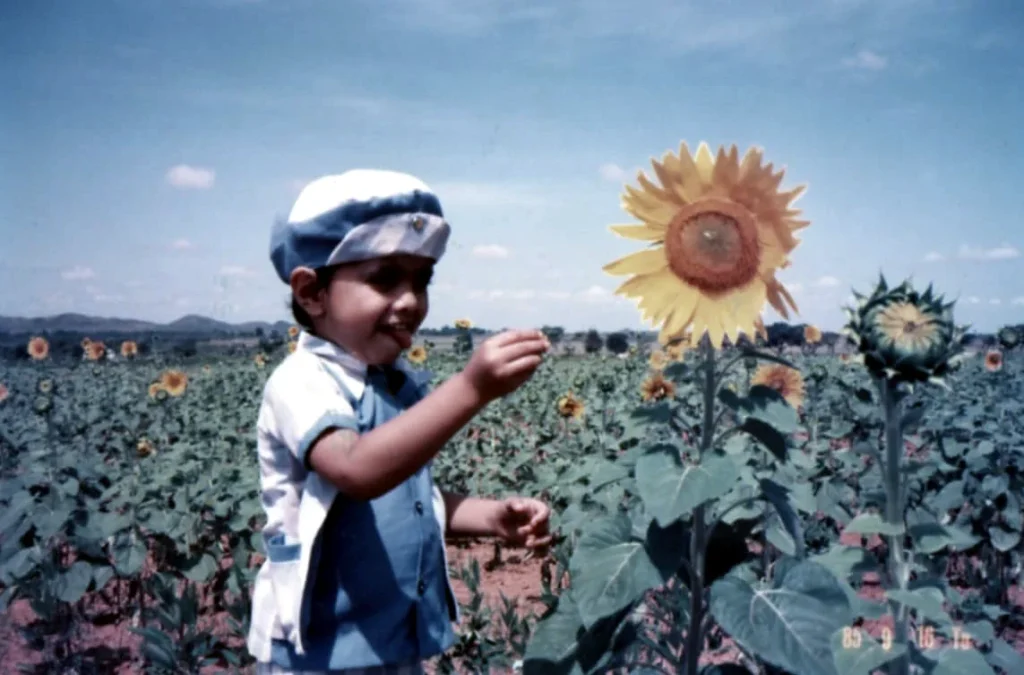
I was just above average in studies. I had a special interest in mathematics and science, but I was allergic to languages and social studies. I did not watch TV or go to the cinema. I was not athletic, but I played outdoor games like cricket and badminton and indoor games like carom and chess. I collected stamps, coins and matchboxes. I was innocent, shy, introverted and short-tempered.
I loved playing with mud, water and nature. I made crafts from coconut leaves, maize stems and areca nut leaves, and I especially enjoyed making boats and sailing them on water. Only a few of these qualities suit my role today; most do not. Looking back, those early traits of curiosity, patience and playfulness planted the seeds of what I would eventually build, even though the path was not obvious then.


Family
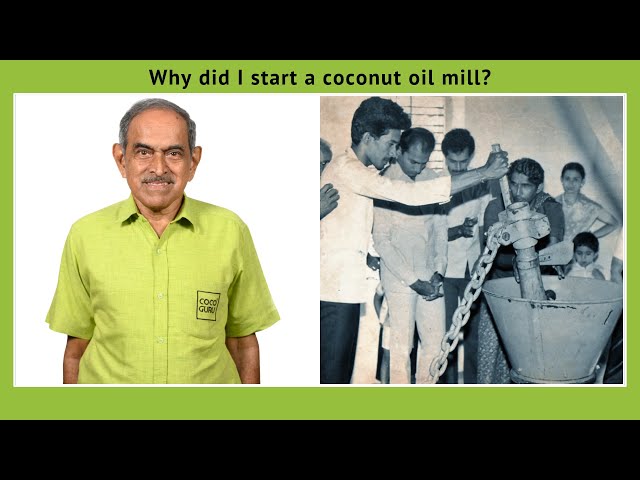
We were a family of four: father, mother, younger brother and me. We came to Puttur in 1987 and have lived here since. My father had no assets, only the determination to start a coconut oil mill, and he started in a small way. Business was very difficult then and not glamorous as it is now. It was hand-to-mouth for many years, and he fought many tough battles along the way, any one of which could have closed the business. That difficulty never came in the way of giving us the right education and exposure.
My mother fully supported my father. She never demanded a lavish lifestyle, saved every rupee, and continues to live simply even today. She understood my intellectual strengths and gave me a healthy diet for all-round development, especially ladies’ finger and cow’s milk for brain development. Though the world would have considered me good for nothing, she stood by me, appreciated my creativity, steered me towards what I was good at, and loved me unconditionally.
My younger brother was more mature than I was and took up responsible, adult affairs. He was not interested in studies, but he took part in social activities and kept up with local general knowledge. He liked interacting with people. He found play childish, though he still partnered with me in hobbies like collecting stamps and coins. You can see how different we are. He talked to our workers and customers and understood the operations very well, so he was the right successor for the business.


Scientist to engineer to manager
As a child I was fascinated by scientists and mathematicians, their great discoveries and their impact on mankind, and I wanted to make discoveries and inventions myself. I passed 10th standard with 77% aggregate, with 85 in science and 93 in maths, and took science for 11th and 12th. I liked physics, chemistry and maths but disliked languages and biology. I listened attentively in lectures, read textbooks out of interest and solved problems as if they were fascinating puzzles. It took no hard work, just a smooth passage with a deeper understanding of the world.
My mother helped me see how important this phase of academics was and how settled my life would be if I did well. My board marks were average, but I excelled in the entrance exams, with 86th rank in CET, which opened doors to engineering and management studies. It was a terrific achievement. I could have chosen any college, including every NIT and any branch. I chose computer science at SJCE, Mysuru, because my parents believed it was where I could apply my talents and have good job prospects. I chose Mysuru because it was smaller than Bengaluru, where I could not adjust because of the air pollution.
My interest in maths and science got me a good engineering seat. I became tired of academics in engineering and did not score great marks, but I was fascinated by programming, data structures and algorithms. The focus shifted to placements, and I was placed just after the 6th semester at Tata Elxsi, the second company to visit our campus that year.
Encouraged by my mother, I decided to pursue an MBA to rise in my career, hoping to combine technical skills with business acumen and perhaps start something of my own one day. By then I had completed my teens and was in my twenties. I understood that what drives the world is not discoveries and inventions in science but money, power and fame. An MBA from an IIM seemed the gateway to such success. (I would not recommend saying that in a B-school interview!)

MBA and the recession
I took the CAT in my final year of engineering and scored 88 percentile overall, with 95+ in Quantitative and Data Interpretation but below 50 in verbal ability. The weakness I had overlooked in childhood had come back to haunt me. I began improving my English by reading newspapers, magazines and books and building my vocabulary with dictionaries. But a weakness of many years could not be overcome in one, two, three or even four years. I attempted CAT twice more with steady improvement in the verbal section. In my fourth attempt I gave it everything and took three months’ leave from my job. I scored 97.5 percentile, with almost 80 percentile in verbal. Still, no IIM shortlisted me.
This time I had also applied to the next level of B-schools, and I got into NMIMS, Mumbai. I had been out of academics for four years and had no background in commerce or management, so I studied well in the first year. In the second year I focused more on travelling around Mumbai to see places and eat tasty food. Then the 2008 recession hit the economy and the job market very badly. In both summer and final placements, most companies did not shortlist me, because four years of IT experience was considered baggage by most FMCG, telecom and banking companies. I finally got placed as a lecturer at Lovely Professional University, Jalandhar. The salary was lower than what I had earned before my MBA, but I was relieved to have landed something, even if it was not what I had aimed for.
Why entrepreneurship
I had always thought of entrepreneurship after my MBA, though not so soon. I wanted to do business on my own because:
- I wanted to build something meaningful, on my own terms.
- I did not enjoy working under bosses or engaging in office politics.
- I wanted to pursue my ideas in my own way.
- I am creative, persistent and don’t give up easily.
- I was not overly concerned about failure or other people’s opinions.
Why my home town
I like places that are green, with a lot of water and heavy rain. I like rural areas, where the air, water and soil are fresh, there is more space and there are fewer people, vehicles and buildings. I don’t like travelling long distances for long periods for work, so home and work should be very close. The cost of living is also much lower. My home town, Puttur in Dakshina Kannada, was perfect in all these ways.
While working at Tata Elxsi, I spent five months in Japan. Though it was a developed country and my life there was good, I felt homesick. I realised the value of being in my home town with people I know, with my loved ones, eating the food I normally eat and enjoying the entertainment I grew up with. People move to cities in search of opportunities, but to me, being in my home town was a great luxury.
Opportunities are everywhere in this age of mobile and internet connectivity. They are not bound by place but by mind.
Why coconut oil
Entrepreneurship is hard. I had no experience and none of the qualities needed to run a business. So instead of doing something new, I felt we should start with something we already knew, under my father’s guidance. I had never bothered about the family business until then. If I visited the oil mill at all, it was to see how the machines worked, how power travelled from motor to gearbox to pulley to the final oil extraction machine, and to eat the coconut sprouts we got while breaking coconuts. I had never talked to employees or customers, and I had never taken part in operations.
Then, while preparing for an MBA interview, the coaching institute advised us to know everything about our life so far, since questions would be asked about it. So for the first time, I asked my father about his business. I was fascinated by the kind of work he did, which needed far greater intellect than the work I had been doing. He told us how our business helps the farmers around us. I learned why coconut oil is a healthy edible oil despite all the propaganda against it, and what his challenges were and why he needed modernisation, branding and marketing.
So starting with coconut oil, before branching into anything else, made sense. It was familiar ground, and I could learn from my father’s experience while slowly finding my own footing.
How I joined the family business
When I did not get a good job after my MBA, I felt this was the time for entrepreneurship, because the opportunity cost was low. I asked my mother if I could join the family business. I thought my parents would be thrilled and agree at once. After a day, they refused. They said the recession was temporary and I had better take a job.
Why did my parents feel it was not wise for me to join?
- They felt the business was too small for my background.
- My skills were too technical and theoretical.
- I lacked the toughness and local knowledge the business demanded.
- My brother was already involved, and dividing responsibilities would be hard.
- My father had built the business painstakingly, and they feared I might disrupt it.
- My mother preferred a safe, structured job to a risky venture.
I respected their decision, completed the course and returned home at the end of March 2009. My joining date at Jalandhar was in July, so I had three months. I told my parents I would research the business and suggest a few ideas for growth. I went to Bengaluru and spent a month on market research with retailers and consumers, then came back and did the same in Puttur. It was clear that a long way lay ahead, and a lot needed to be done before we could be considered a serious brand in Bengaluru.

Branding
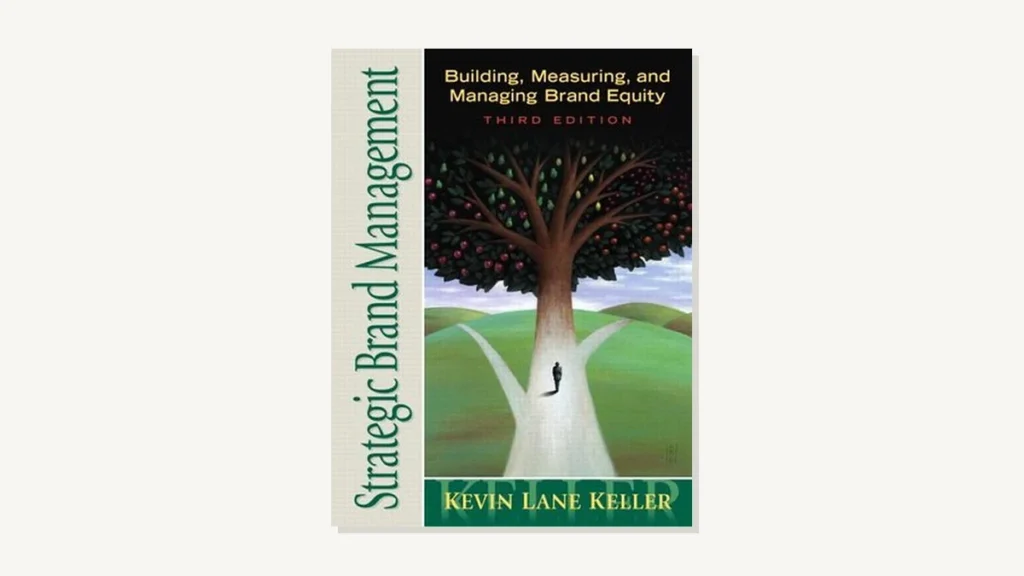
I had chosen marketing as my MBA specialisation precisely because it was my weakness and I wanted to learn more about it. My summer internship after the first year was in marketing, but I could not do a good job because I did not understand the concepts. In the second year I took an elective, Strategic Brand Management, for which we had to refer to a book by Kevin Lane Keller. It was an eye-opener for a novice like me.
After finishing the course and conducting marketing surveys, I sat at home and read that book from the first page to the last over a week, lying on the bed. Family members wondered what I was doing; I told them I would implement the ideas. In the years since, I have come to see that the most important factor behind sales is the brand, and that every activity of the company must be directed towards building it.
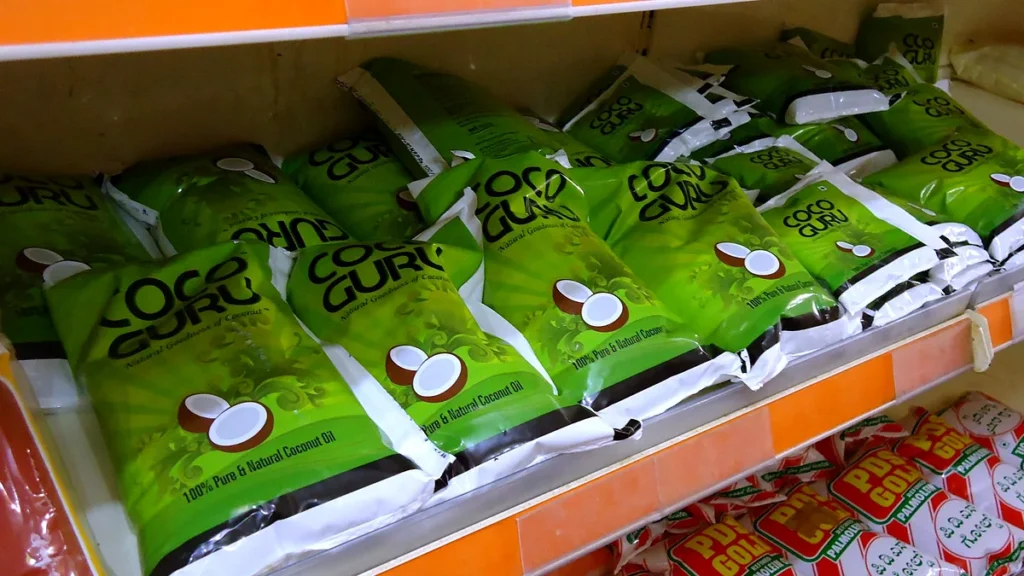
Until then, coconut oil was sold loose or under the Santhosh brand with no consistent graphics. We needed a name that was unique, represented the brand, was easy to remember, and could be protected by a trademark, with a .com website domain and social media handles available. That is how Cocoguru was born: not just a name, but a symbol of a vision rooted in tradition and built with modern branding insight.
Automatic packing
My branding research had shown that supermarkets emphasise strong packaging and recognisable branding, while pricing and payment terms come second. So the first part of my journey was setting up an automatic packing plant to pack coconut oil in pouches and bottles, with attractive, professional designs. It was a capital-intensive project, which we funded through a bank loan, with a subsidy from the Coconut Development Board. In six months the building was ready, power connections were made, tanks and pipelines were set up, and the packing and filling machines were installed. We even put an oil vending machine in our retail outlet.
Many more improvements were in the pipeline, but making them would have disturbed the existing set-up. So my father recommended setting up a new plant as a new legal entity in a new place, and Cocoguru Coconut Industries Private Limited was started at Kallarpe. It was the beginning of a new chapter, in which I could bring together everything I had learned, from childhood tinkering to business strategy, to build something of my own.