
Roasted and Cold Pressed coconut oil come from the same dried coconut (copra), but they are made a little differently, so they look, smell and taste different. Many people are unsure which to choose, and some wonder whether one is purer or healthier than the other. Here is what is the same, what is different, and how to choose.
What is the same
Both are 100 percent pure, edible grade coconut oil, and both are made the same way up to one step.
- The raw material is the same: dried coconut (copra).
- The oil is extracted the same way, in an expeller press.
- Both are unrefined and filtered, and nothing is added: no perfumes, preservatives, antioxidants, other edible oils or mineral oils.
- Both are good for cooking, and both can be used on hair and skin.
Both are used for cooking, baby care, skin care, hair care, soap making, lighting lamps, oil pulling and in traditional medicine.
What is different

| Feature | Roasted | Cold Pressed |
|---|---|---|
| Roasting of the copra | Yes | No |
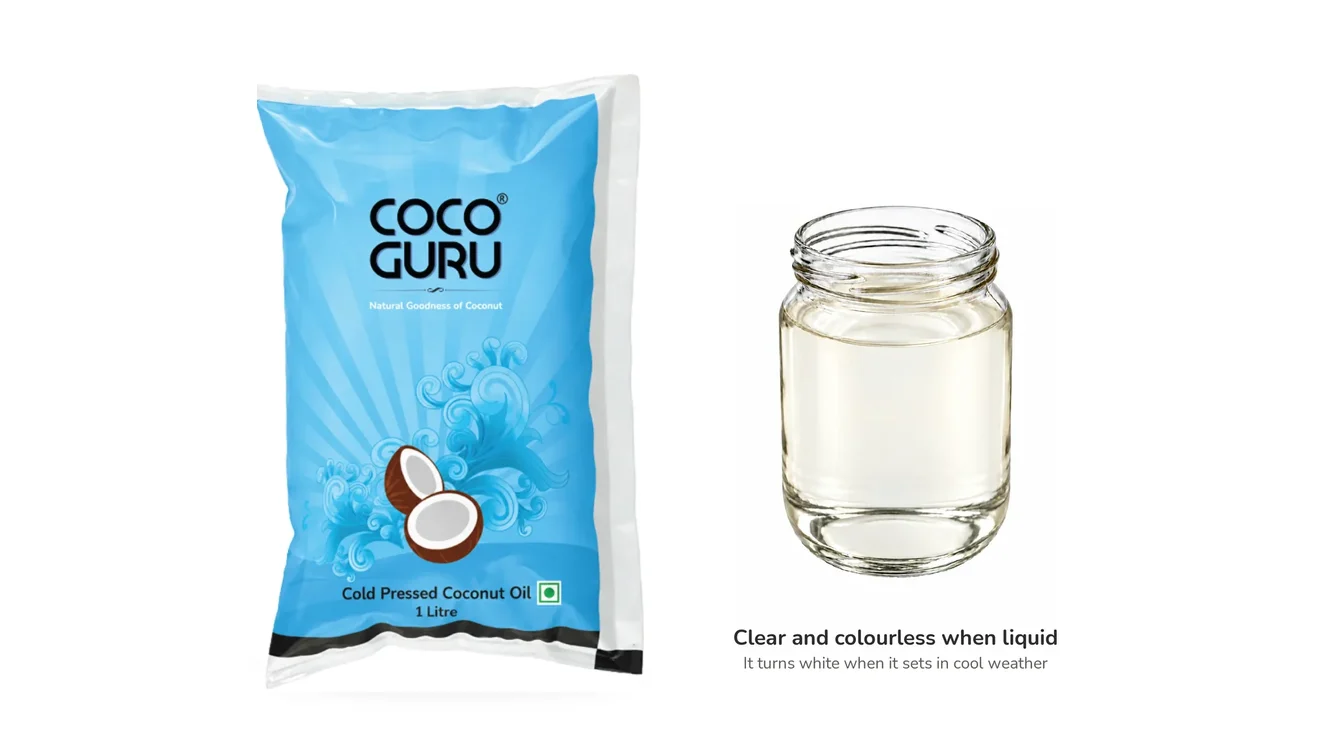
| Colour | Golden yellow | White |
| Aroma and taste | Strong, nutty, like roasted groundnuts | Mild, with the natural taste of copra |
| Shelf life | Longer | Shorter |
| Recommended for | Cooking, where a strong coconut aroma is wanted | Deep frying, and dishes where a mild aroma is wanted |
The shelf life of any oil depends on the pack, how it is stored and how long it is open, so we show only that Roasted keeps longer than Cold Pressed. Check the pack for the best before date.
How each is made
| Step | Roasted | Cold Pressed |
|---|---|---|
| 1. Copra drying and cutting | Dried with hot air, then cut into small pieces | Dried with hot air, then cut into small pieces |
| 2. Copra roasting | Roasted for about an hour in several stages | Skipped |
| 3. Oil extraction and filtering | Crushed in an expeller; the oil is filtered | Crushed in an expeller, using only the first crushing; the oil is filtered the same day |
| 4. Oil packing | Pouches, bottles and cans | Pouches, bottles and cans |
Roasted, step by step
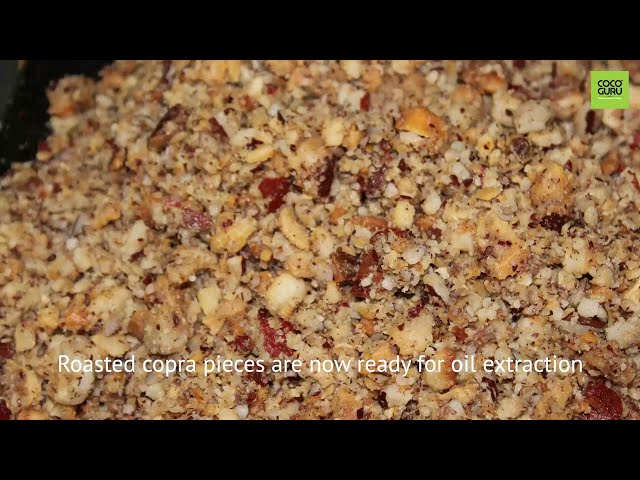
The copra is first dried with hot air at 75 to 80°C to about 2.5 percent moisture. It is then cut into small pieces and roasted for about an hour in a four-stage steam-jacketed cooker, moving from one stage to the next before it reaches the expeller. A little steam is let in to cook the copra, which opens up the fat cells so the oil comes out more easily. The roasted copra is crushed in an expeller and the oil is filtered in three stages.
Roasting costs more, in fuel and electricity, and the oil cake left over sells for a lower price. We have made Roasted oil this way since our Kallarpe factory began, and the process is unchanged. Cocoguru is the first and still the only local brand making roasted oil for cooking in coastal Karnataka.
Cold Pressed, step by step
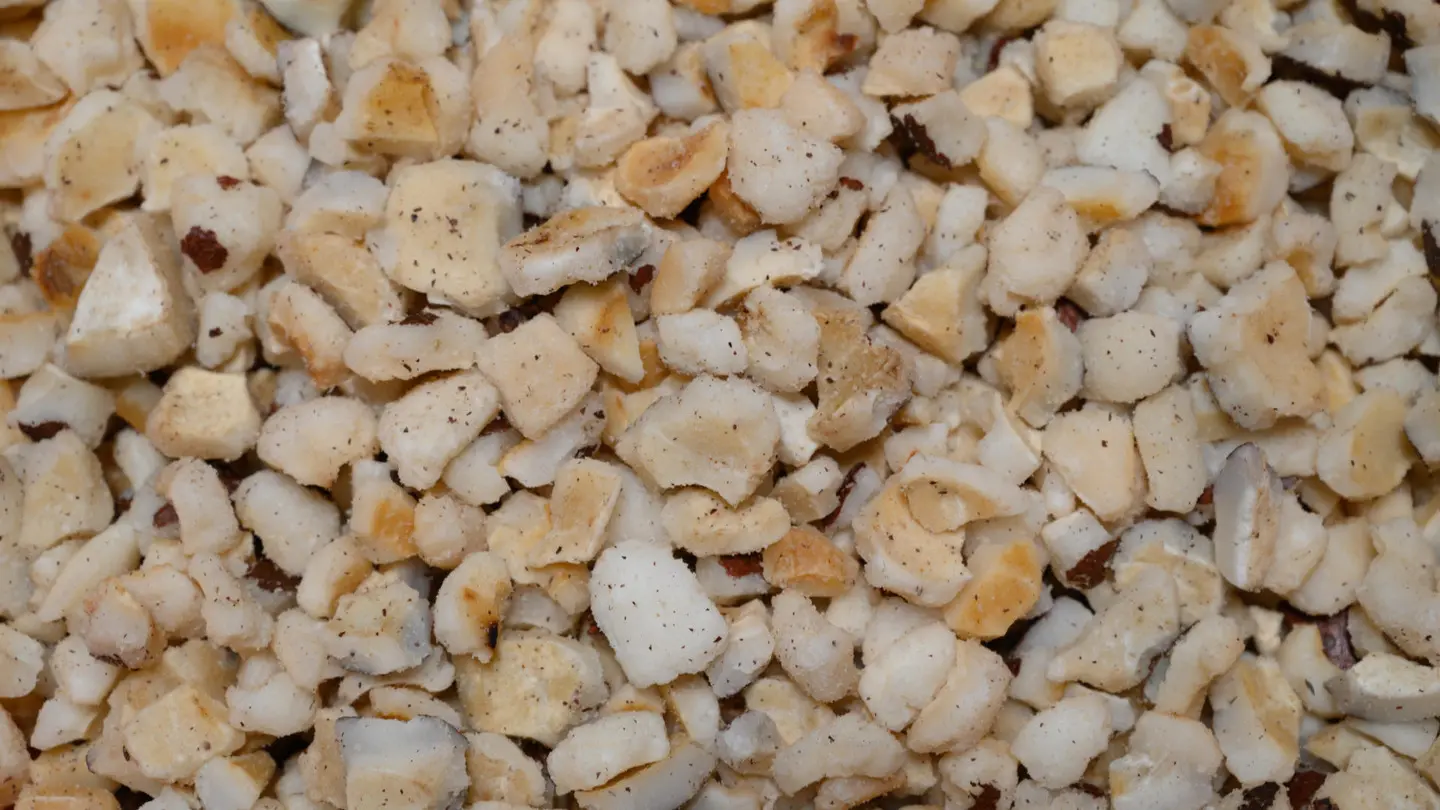
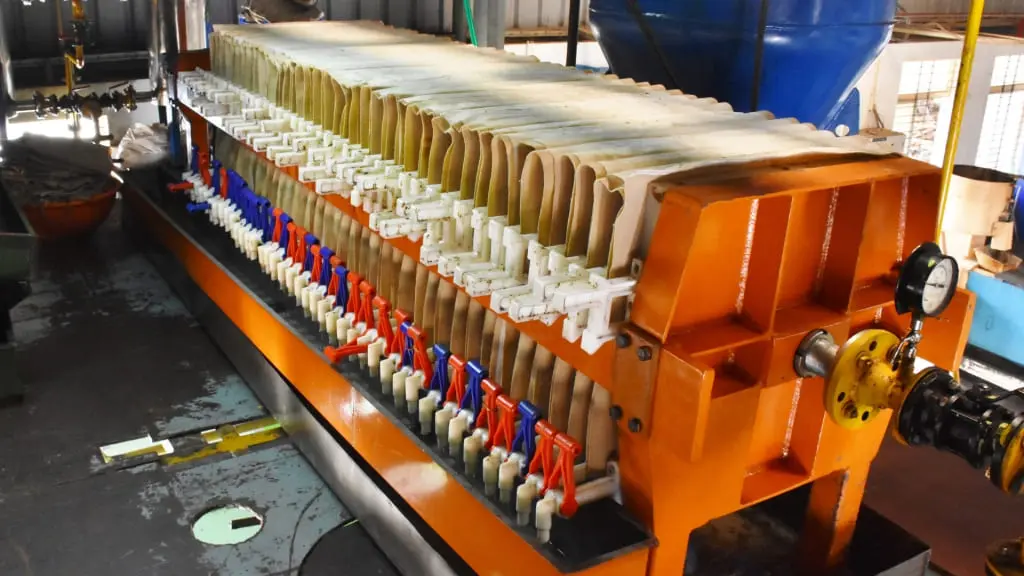
The copra is dried and cut in the same way but is not roasted. It is crushed in an expeller, and only the oil from the first crushing goes into Cold Pressed. The oil is cleared in a filter press the same day.
We launched Cold Pressed in 2019. At first we made it in small quantities with a rotary mill (ghani) and sold it only at our counter in Yelmudi, Puttur. Soon after, we began making it on a large scale with an expeller and sold it in consumer packs across our area. Cold Pressed oil here is made from dried coconut, so it is different from virgin coconut oil, which is made from fresh coconut.

Does roasting harm the oil?
During roasting, the oil and the cake reach up to 100°C, against about 60°C in cold pressing. The higher heat drives out more moisture, which lowers the risk of the oil going rancid, and roasting also sterilises the copra, so the oil keeps longer.
In many oils, high heat breaks the fat down into free fatty acids, which makes the oil rancid. Coconut oil is mostly saturated fat and is very stable, so mild roasting does not harm it. Its nutrition lies in its fatty acid composition, which roasting does not change.
Which oil should I use?
| What you are cooking | Our suggestion |
|---|---|
| Deep frying, such as chips, puris and fritters | Cold Pressed |
| Dishes where you want a mild coconut taste | Cold Pressed |
| Curries, chutneys, tempering and sweets where a strong coconut aroma is wanted | Roasted |
| Traditional Mangalorean dishes cooked the way they used to be | Roasted |
| Hair oil, where a rich aroma is preferred | Roasted |
People used to Roasted oil usually stay with it. Many urban and online buyers prefer Cold Pressed, often simply because of a common belief that anything cold pressed is better. Both are pure coconut oil, so choose by the taste and aroma you like.

